I Have ¥50M in Assets. I Still Don't Know What I'm Doing About My Daughter's Education.
A Japanese salaryman with ¥50M in assets breaks down education costs, school choices, and why he refuses to call it an "investment"

Table of Contents
- Two Years of English Programming Classes: The Verdict
- I’d Never Actually Calculated Education Costs
- The Total Bill Made Me Go Quiet
- If She Does Private Middle School: The Real Numbers
- Why We Don’t Have a Separate “Education Fund”
- Japan’s Education Policy Is Changing Fast
- My Wife and I Don’t Talk About Education Money
- Education Spending Isn’t an “Investment”
Two Years of English Programming Classes: The Verdict
My daughter turns 8 this spring. Starting third grade in April.
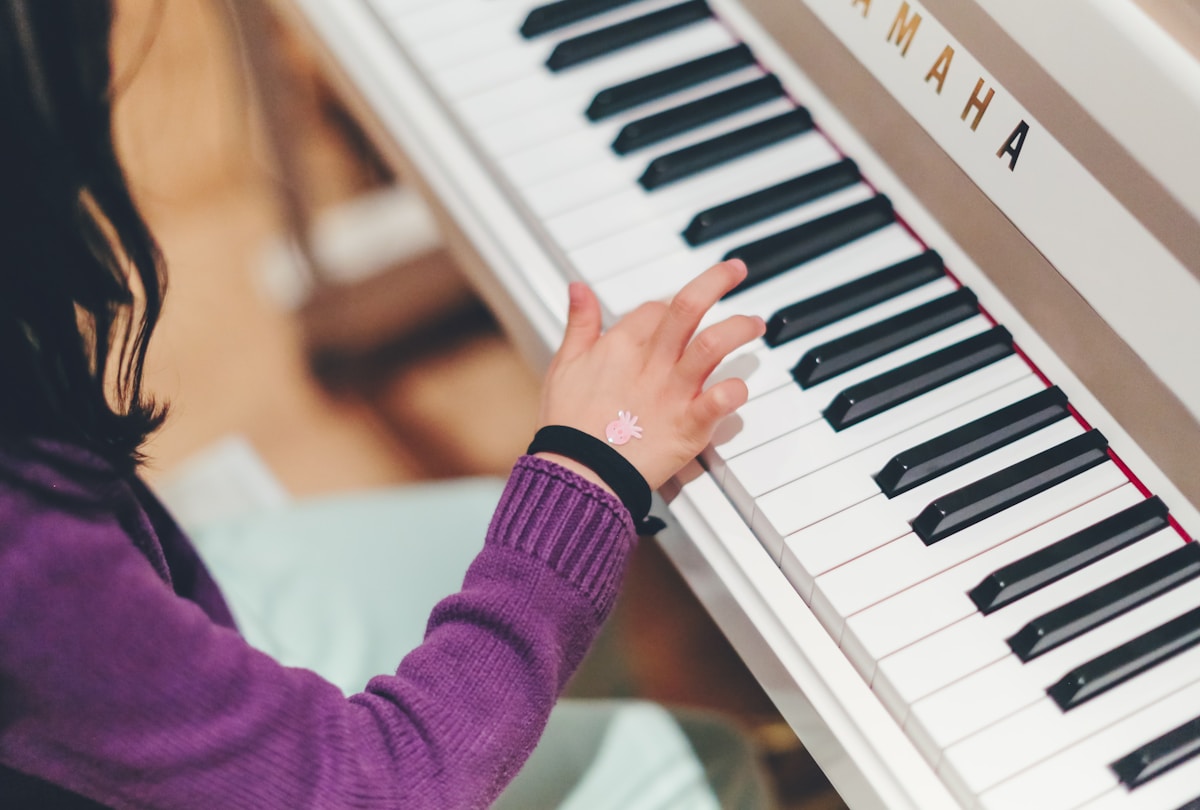
For the past two years, she’s been taking “English programming” classes at an after-school program — a curriculum that teaches basic coding concepts in English. ¥14,000 a month ($93). She also takes piano at ¥12,000 ($80). Total: ¥26,000 a month on extracurriculars. ¥312,000 a year ($2,080).
Starting in April, we’re dropping down to just piano. The English programming curriculum was a fixed two-year program, so it’s ending naturally. But honestly? I’m not sure it did much.
Early English education for Japanese kids is one of those topics every parent agonizes over. “Start them young!” sounds logical. But when your kid’s Japanese is still shaky, layering English on top just made both languages feel half-baked. I know this is a “well, you could’ve figured that out before spending ¥340,000” situation. She enjoyed parts of it, so I’m choosing to call it tuition for life experience. Let me have that.
I’d Never Actually Calculated Education Costs
After writing about our ¥170,000 monthly food bill, I learned that gut feelings and actual numbers diverge — a lot. So I figured education costs deserved the same treatment.
Japan’s Ministry of Education released its latest “Children’s Learning Cost Survey” (FY2023 data, published December 2024):
| School Level | Public (Annual) | Private (Annual) |
|---|---|---|
| Elementary | ¥336,000 ($2,240) | ¥1,828,000 ($12,187) |
| Middle School | ¥540,000 ($3,600) | ¥1,440,000 ($9,600) |
| High School | ¥510,000 ($3,400) | ¥1,060,000 ($7,067) |
For context: Japan’s public elementary schools are essentially free for tuition — that ¥336,000 is mostly extracurricular activities, school supplies, and after-school programs. Only ¥82,000 of it goes to the school itself. The rest? Juku (cram school), piano lessons, swimming classes. The stuff outside school costs more than school.
The Total Bill Made Me Go Quiet
| Path | Total Cost (K-12 + University) |
|---|---|
| All public + national university | ¥8.2M ($55K) |
| Public through high school + private university | ¥10M+ ($67K) |
| Private from middle school + private university | ¥17M ($113K) |
| All private + private university (science) | ¥22.5M ($150K) |
Compare that to the US: the average cost of a four-year public university is about $104,000 including room and board. Japan’s all-public path at $55K total (including K-12) looks almost reasonable. But go private from middle school, and suddenly you’re in six-figure territory.
I personally want to send my daughter to a private middle school. My own public middle school had, let’s say, a rough crowd — students and teachers alike. I remember a kid smashing a classroom window in second year, and the next day class just… continued like nothing happened. I can’t honestly say that environment made me a better person. I want my daughter to focus on learning and friendships without dealing with what I dealt with.
Here’s the ironic part though: my wife went to private school from middle school onward. Her take? “It wasn’t that special.” The public school kid has more illusions about private school than the person who actually went. Grass is always greener, I guess.
But my daughter is 8. Whether she wants to take entrance exams is not something I can decide for her. So this stays filed under “pending.”
If She Does Private Middle School: The Real Numbers
In Japan, if you’re aiming for a competitive private middle school, your kid starts juku (prep school) around age 9 or 10. Three years of intensive prep costs ¥2-3 million ($13,000-20,000). That’s ¥50,000-80,000 per month on top of everything else. And that’s just regular classes — summer intensives, winter courses, and mock exams can push sixth grade alone to ¥1.5 million ($10,000).
Can we afford it? Yes. With ¥50M in assets, dual income, and one child, the math works. But if we had two or three kids? Juku alone would eat ¥2-3 million per year. More kids means more time spent, more money needed, less time to work, less income. I don’t need a sociology degree to understand why Japan’s birth rate is 1.2.
Why We Don’t Have a Separate “Education Fund”
We don’t have a dedicated education savings account. No gakushi hoken (education insurance — Japan’s version of a 529 plan, sort of). No separate envelope.
Education costs come from our total asset portfolio. Same philosophy as our food budget: we don’t manage monthly line items, we manage the whole balance sheet.
I did look into gakushi hoken. The best return rate as of 2025 is Sony Life at 123.5% — meaning you get 23.5% more than you put in over 18 years. Not terrible. But your money is locked up for nearly two decades, and early withdrawal means losing principal. My index funds have been returning 5-7% annually. Hard to justify the liquidity sacrifice.
Here’s what saving through NISA (Japan’s tax-free investment accounts, similar to a Roth IRA) looks like:
| Target | Years | Monthly at 3% Return |
|---|---|---|
| ¥3M ($20K) | 10 years | ¥22,000 ($147) |
| ¥5M ($33K) | 10 years | ¥36,000 ($240) |
| ¥5M ($33K) | 15 years | ¥23,000 ($153) |
My daughter enters university in about 10 years. ¥36,000 a month at 3% gets us to ¥5M. Part of our current investment allocation effectively covers this — we just haven’t labeled it “education fund.”
Japan’s Education Policy Is Changing Fast
The most surprising part of this research was how much the policy landscape has shifted in just two years:
2025: University tuition waived for families with 3+ children (no income limit). Caps at ¥540,000 for public, ¥700,000 for private.
April 2026: High school tuition support removes income restrictions. Private school support cap raised from ¥396,000 to ¥457,000 (covering the national average private school tuition).
January 2027 (planned): “Kids Support NISA” launches — a tax-free investment account for ages 0-17. Annual limit ¥600,000, lifetime cap ¥6M. Index funds only. Withdrawals from age 12.
That last one is interesting for us. If it starts when my daughter is 9, we’d have 9 years until university. ¥600,000 × 9 = ¥5.4M in tax-free space. At 3% annual returns, that grows to roughly ¥6.5M — nearly enough to cover four years of university tuition. Definitely worth considering.
My Wife and I Don’t Talk About Education Money
We’ve never had a serious conversation about education finances. Not because we’re avoiding it — there’s just nothing to worry about yet. Dual income, decent assets, one kid.
If we were still in the ¥10M asset range, this conversation would look very different. Private middle school alone costs ¥17M — 1.7x your entire net worth. You can’t exactly say “don’t worry about it” with those numbers. Building wealth gave us options for our daughter’s education. That’s something I feel concretely.
Education Spending Isn’t an “Investment”
I’ve seen people call education spending “investing in your child.” Expected returns. Human capital optimization. I get the framework, but it doesn’t sit right with me.
When I put money into index funds, I’m expecting returns. There’s math. There are benchmarks. When I pay ¥12,000 a month for piano lessons, I’m not calculating IRR on my daughter’s musical development.
What even is education spending? Gratitude for the joy she’s brought us? Parental duty? Or just “this is what’s needed right now, so we pay it”?
I don’t have an answer. Probably never will. But I know this much: that ¥12,000 a month buys me the moment when she comes running to say “I learned a new song today!” and plays it with three wrong notes and pure pride.
That’s not an investment. It’s just… being a dad.

This article is based on personal experience and is for informational purposes only — not financial or educational advice.
Related Articles

¥170K a Month on Food for Three. Here's Where Every Yen Goes.
A dual-income Japanese family of three breaks down their ¥170K monthly food costs and explains why they won't cut back despite April's price hikes

Japan's 5% Wage Hike Made Headlines. My Raise Was Zero.
A 40-something salaryman breaks down his ¥350K take-home pay and explains why he stopped caring about raises

I Ran the Numbers on My iDeCo Exit Tax — Turns Out I Can Just Take It All at 60
¥10M retirement + ¥10M iDeCo. I simulated lump sum vs pension payout and the answer surprised me.