Gold Is Up 6x in 8 Years. I'm Still Dollar-Cost Averaging Into Index Funds
Gold hit ¥30,000/g. My wife suggested buying it 8 years ago. I didn't. Here's why I still choose index funds over gold, even after comparing the data.
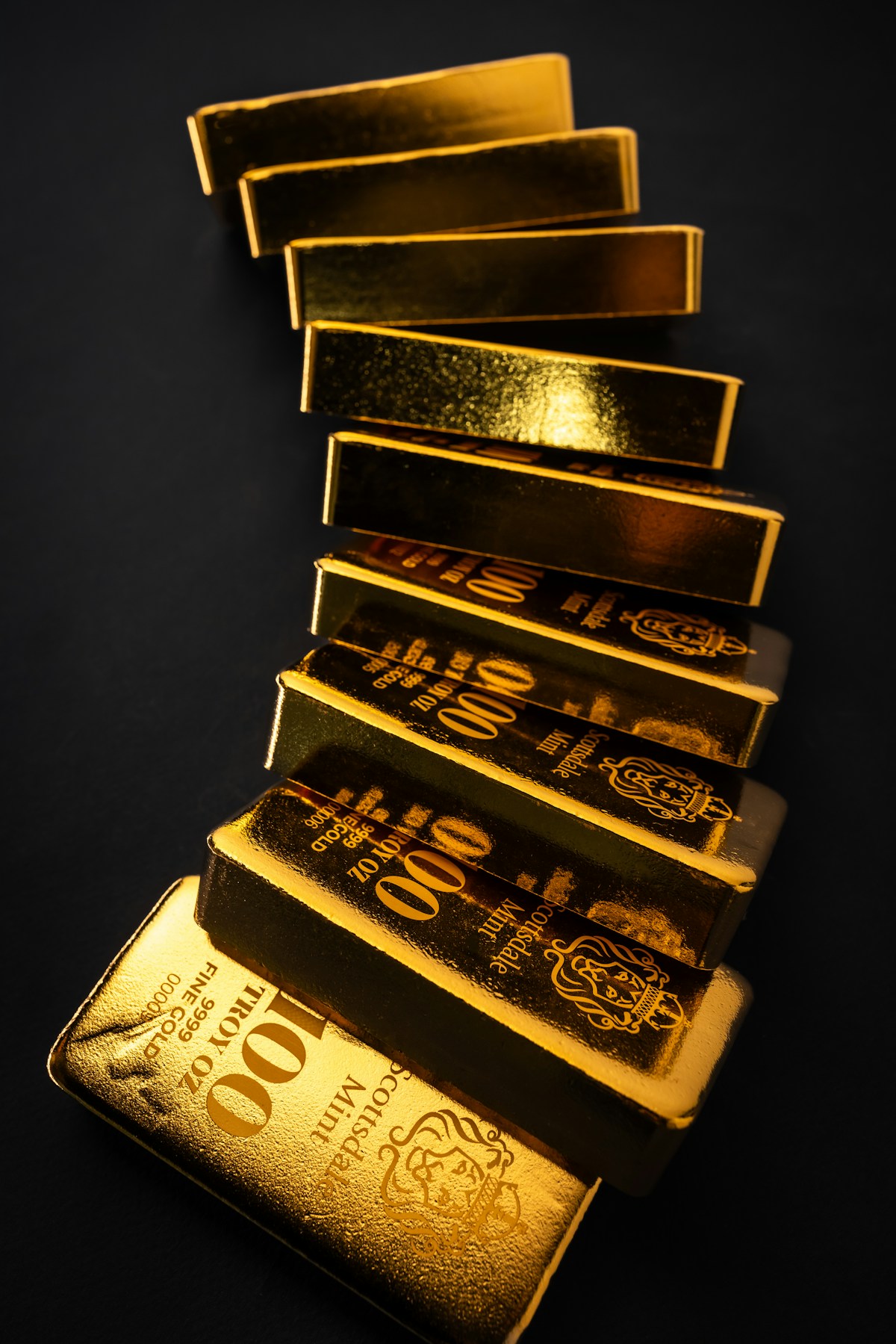
Eight years ago, my wife brought up gold.
“What do you think about a gold savings plan?” she asked one evening. A senior colleague at her company had been doing it, and she was curious. At the time, my image of gold was simple: a safe-haven asset that barely moved. I was chasing returns through index funds, and something that just sat there — no growth, no dividends — wasn’t on my radar. I gave a noncommittal “hmm, maybe” and we never followed through.
Eight years later, gold is above ¥30,000 per gram in Japan. Back then it was around ¥5,000. That’s roughly 6x. I haven’t asked my wife if she remembers that conversation. I don’t need to. We both know.
Back Then, Gold Was Boring
Around 2018, gold was trading at about ¥5,000/g domestically, or around $1,300/oz internationally. Honestly? It was dull.
The stock market was on a tear. The S&P 500 was delivering 10%+ annualized returns, and the prevailing wisdom was “just put it in an index fund and let it ride.” In that environment, the idea of buying gold felt like parking money in a vault and hoping for the best.
Gold doesn’t produce anything. Unlike stocks — where companies generate profits and distribute them to shareholders — gold just… exists. It’s rare, it’s shiny, and that’s about it. As Buffett put it: “Gold has no cash flow. It’s a collectible.” That was exactly how I felt.
Honestly, eight years later, I still feel mostly the same way.
¥30,000. What Happened?
In March 2026, Japan’s retail gold price hit ¥30,248/g. That’s 4x from 2020’s ¥7,000, and 6x from where it was when my wife suggested buying it.
What’s driving this? After digging into the data, I’d boil it down to three structural forces.
First, central banks have been buying gold like crazy. Since 2022, they’ve been purchasing over 1,000 tonnes per year — more than double the pre-2022 pace. China, Poland, and India are leading the charge. Ninety percent of the top 20 central banks have increased their gold reserves as a share of foreign exchange holdings.
Second, de-dollarization. After Russia’s dollar-denominated assets were frozen due to sanctions, the risk of holding dollars became real for many countries. BRICS nations especially have been swapping dollars for gold.
Third — and this is the big one — fiat currencies are losing purchasing power. Governments worldwide have been printing money, and the result is showing up in gold prices. Ray Dalio said, “If you don’t own gold, you know neither history nor economics.” Bold statement, though he also cautioned that gold is “no longer cheap.”
In China, young people are buying tiny 1-gram gold pieces called “gold beans” — the purchase rate among 18-24 year olds jumped from 16% in 2016 to 59% in 2021. Costco is selling gold bars with purchase limits because demand is so high. Gold smuggling seizures in Japan hit 493 cases in 2024, up 2.3x from the prior year.
The way I see it: gold isn’t going up. Money is going down.
Gold vs. Index Funds: The Numbers
I got curious, so I pulled the data.
Over the last five years, gold has outperformed the S&P 500. In 2025, gold returned +61% year-to-date — a monster year fueled by central bank buying and geopolitical risk.
But zoom out to 30+ years, and the picture flips:
| Metric | Gold (USD) | S&P 500 |
|---|---|---|
| Annualized return (30yr+) | ~8.0% | ~10.3% |
| Sharpe ratio | Lower | Higher |
| Dividends | None | Yes |
| Correlation with stocks | 0.06 | — |
The S&P 500 wins on both raw returns and risk-adjusted efficiency over the long haul. And gold pays no dividends — ever.
The one genuinely interesting number: the correlation between gold and stocks is 0.06. Essentially zero. That means when stocks crash, gold doesn’t necessarily follow. Backtests suggest that adding 5-10% gold to a stock portfolio can improve overall risk-return efficiency. Dalio’s “All Weather Portfolio” allocates 7.5% to gold.
The math checks out. But math isn’t everything.
It’s also worth noting that gold’s recent outperformance is statistically anomalous — about 1.5 standard deviations above its long-term average. Whether this structural shift persists is anyone’s guess.

Still Not Buying
Looking at the data, there’s a part of me that thinks, “Maybe I should put 5% in.”
But I won’t.
My portfolio is roughly 50% VTI (total US stock market), 10% NASDAQ 100, 8% all-country index, 5% FANG+, 4% iDeCo (Japan’s retirement account), and the rest in cash. Zero gold. If I were to add it, I’d probably cut from the cash allocation. But I can’t bring myself to make that move.
I think the reason is philosophical more than financial. I like the mechanism of stocks. Companies build things, serve customers, generate profits, and share a piece of that with shareholders. When I own index funds, I feel like I’m participating in that cycle of creation. That philosophy is why I stopped overthinking and committed to index funds in the first place.
Gold doesn’t have that. It’s valuable because it’s scarce. Because everyone agrees it’s valuable. In that sense, it’s closer to real estate — except real estate at least generates rent. Gold just sits in a vault, being gold.
Dalio says if you don’t own gold, you don’t understand economics. Buffett says it’s a collectible. I suspect they’re both right, in their own way. It’s a matter of which philosophy resonates. I’m on Team Buffett. Not because I’ve proven him right — but because it’s how my brain works.
Can’t Buy the Insurance, Can’t Buy the Investment
There’s another honest reason: the price feels too high.
¥30,000/g. Six times what it was eight years ago. Buying now feels like chasing. JPMorgan is calling for $5,055/oz by Q4 2026, Yardeni Research says $6,000 — but analyst predictions are coin flips dressed up in spreadsheets. I felt the same temptation to react during the tariff scare when my portfolio dropped $47K — and doing nothing turned out to be the right call.
Weirdly, I don’t feel this way about stocks. I’ve been buying the S&P 500 at all-time highs for years without flinching. But gold at all-time highs? Somehow it feels different. Maybe because my mental model of gold is still “stable safe haven,” and ¥30,000 doesn’t fit that model. Gold as an investment? I can see it intellectually. Gold as insurance? I can’t feel it anymore. It’s stuck in a weird no-man’s land.
If I Were Buying Gold, Here’s How
I’m not buying, but I did the homework. And honestly, 2025 was a game-changer for accessibility.
| Product | Expense Ratio | NISA Eligible | Notes |
|---|---|---|---|
| 425A Global X Gold ETF | 0.1775% | Growth quota | Launched Sept 2025. Cheapest |
| 447A SS SPDR Gold ETF | 0.177% | Growth quota | Launched Nov 2025 |
| SBI iShares Gold Fund | 0.1838% | Growth quota | Mutual fund. ¥100 minimum. AUM ¥366B |
| 1540 Pure Gold Trust | 0.44% | Growth quota | Physical conversion available at 1kg+ |
New low-cost gold ETFs launched on the Tokyo Stock Exchange in 2025, cutting expense ratios in half compared to older products. In Japan’s NISA (similar to a Roth IRA), you can buy these in the growth investment quota — meaning zero capital gains tax. The tsumitate (regular savings) quota doesn’t cover gold, though.
If you’re holding physical gold bars and sell within 5 years, you’re looking at comprehensive income tax rates up to 55%. After 5 years, it’s halved but still taxed. For pure tax efficiency, NISA + gold ETF is the clear winner.
75.5% of Japanese retail investors surveyed by Rakuten Securities expect gold prices to rise in 2026. The flow is real. I just won’t be part of it.

What If Gold Hits ¥100,000 in 10 Years?
I’d be lying if I said it wouldn’t shake me.
But the thing is — if the future were knowable, everyone would already be doing it. Gold could be at ¥100,000 or ¥15,000. The S&P 500 could triple or get cut in half. Nobody knows. Not Dalio, not Buffett, not JPMorgan.
If my wife and I had started putting ¥10,000 a month into gold eight years ago, we’d probably be sitting on a ridiculous gain right now. But instead, we put it into index funds. Those grew too. Not 6x, but they grew. And we’re in a much better place than if we’d done nothing at all. When I told my wife gold had 6x’d, she just said, “Yeah, we probably should’ve done that.” No drama, no regret — just a quiet acknowledgment. We both know it’s hindsight. Whether that decision was wrong is something we’ll never truly know.
I’m not buying gold. But I’m not saying you shouldn’t. Putting 5-10% of your portfolio in gold is mathematically sound, and I respect that call. It might even be smarter than what I’m doing.
But I want to bet on things that produce something. Companies making profits, economies growing, and me quietly collecting a tiny slice of that output. That’s the game I signed up for. That’s all I know how to do — keep dollar-cost averaging into index funds, quietly, and hope the math works out in the end. I haven’t sold a single share since 2018, and I don’t plan to start now.
I wrote about the emotional side of watching gold 6x from the sidelines on Note — the stuff I can’t say at the office.
This is a personal experience article, not investment advice. Invest at your own risk.
Related Articles

I Have ¥50M in Assets. I Still Don't Know What I'm Doing About My Daughter's Education.
A Japanese salaryman with ¥50M in assets breaks down education costs, school choices, and why he refuses to call it an "investment"

¥170K a Month on Food for Three. Here's Where Every Yen Goes.
A dual-income Japanese family of three breaks down their ¥170K monthly food costs and explains why they won't cut back despite April's price hikes

Japan's 5% Wage Hike Made Headlines. My Raise Was Zero.
A 40-something salaryman breaks down his ¥350K take-home pay and explains why he stopped caring about raises