I Made ¥100K on Game Stocks and Thought I Was a Genius — Then I Learned to Stop Thinking
From panic-selling game stocks to ¥370,000/month in index fund autopilot. The best strategy I found? Stop thinking.

Table of Contents
- My first stock purchase was a video game company
- Want to know what those shares are worth now?
- The 10-year gap where my brain slowly rewired
- Restarting with NISA — and immediately getting tested
- ”Stop thinking” — the most powerful investment strategy I’ve found
- Our current setup: ¥350,000/month as a couple (¥370,000 including iDeCo)
- Turns out, courage was never the point
My first stock purchase was a video game company
My entry into investing wasn’t exactly a Warren Buffett origin story. I googled “SBI Securities” (Japan’s version of Fidelity or Schwab), opened an account, and bought stock in a gaming company I liked. That’s it.
No grand plan for financial independence. No spreadsheet analysis. Just “wouldn’t it be cool to own shares of a company that makes games I play?” Pure hobby energy.
The stock went up. I made about ¥100,000-200,000 ($700-1,400). “Hey, not bad!” I thought, and sold immediately.
This is my single biggest investing regret.
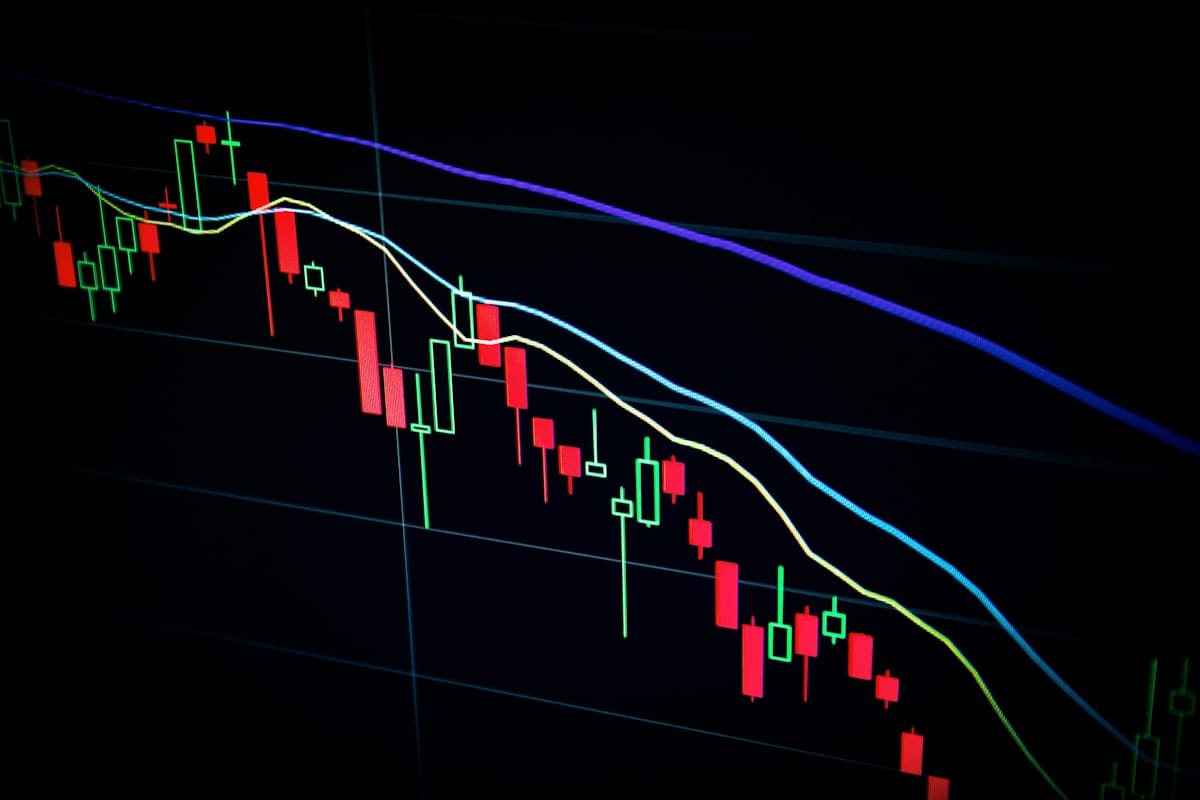
Want to know what those shares are worth now?
If I’d held onto those gaming stocks, they’d be worth several times what I paid. When I finally looked up the numbers years later, I felt genuinely sick. And the gaming stocks weren’t even my worst loss — I later lost ¥2 million on a single telecom stock, which finally taught me that my own judgment was my biggest liability.
But here’s the thing — back then, I didn’t even have the concept of “long-term holding.” To me, investing meant: buy, wait for it to go up, sell. That’s it. What I was doing wasn’t really investing. It was closer to gambling with a stock market app.
Stock goes up? Exciting. Stock goes down? Terrifying. Check the chart every day. Celebrate a ¥100K gain like you won the lottery. Sell immediately before it disappears.
With that mindset, of course I was never going to build real wealth.
The 10-year gap where my brain slowly rewired
After selling those gaming stocks, I basically stepped away from investing. For somewhere between 5 and 10 years, I did almost nothing.
It was a one-two punch. I’d already taken losses on company stock through my employer’s stock purchase plan, and then the 2008 financial crisis hit. After that, investing wasn’t even on my radar. It’s not that I was scared or burned out — I literally forgot about it. The word “stocks” just vanished from my vocabulary.
During that gap, I dabbled in Japanese high-dividend stocks — but that was more out of inertia than any real strategy. I intentionally didn’t watch the price movements.
What pulled me back was Abenomics — the economic stimulus program that sent Japan’s stock market soaring. The investing world was buzzing again, and I noticed my savings had quietly piled up thanks to my cheap hobbies. Money I didn’t spend had been stacking up in my bank account all along.
Looking back, that gap wasn’t wasted time. It was the period where my brain was slowly, gradually shifting from “make quick money” to “grow wealth over time.” I just didn’t realize it was happening.
Restarting with NISA — and immediately getting tested
When a career setback forced me to get serious about building wealth (I wrote about that in my previous post), I chose to restart with NISA — Japan’s tax-advantaged investment account, similar to a Roth IRA in the US. But this time, no individual stocks. Index funds only. No short-term trades. Automatic monthly contributions.
I thought I’d learned my lesson. The first three years were painfully boring — barely any growth to show for it. Then the market decided to test me.
In one particularly good year, my unrealized gains crossed ¥2,000,000 (about $14,000). Two million yen, just sitting there in green numbers on my screen. My brain immediately started calculating: “If I sell now, that’s a family vacation. New appliances. Maybe even a nice watch.”
And the TV wasn’t helping. Multiple financial commentators were saying “US stocks will drop next year” and “smart money is taking profits now.” Not just one person — several so-called experts, all saying the same thing.
I’ll be honest: I almost sold. I opened the SBI Securities app, navigated to the sell screen, and just… stared at it.
”Stop thinking” — the most powerful investment strategy I’ve found
But I didn’t sell. Two realizations saved me.
First: I noticed that “US stocks will crash” is something someone says every single year. 2023, 2024, 2025 — there’s always an expert predicting doom. Sometimes they’re right. Usually they’re wrong. The honest answer is that nobody knows. Not the TV pundits, not the YouTube finance gurus, and definitely not me.
Second — and this was the real breakthrough: I asked myself, “Okay, say I sell. Then what?” If I convert everything to cash, what happens when I want to get back in? Am I going to have the guts to drop ¥3,000,000-4,000,000 ($20K-28K) in one shot?
Absolutely not. No way.
With monthly contributions, I’m putting in ¥100,000-200,000 at a time. That’s easy. No courage required. But buying back in with a lump sum of several million yen? That’s a completely different psychological game. The moment I sell, I might never be able to rebuild the same position.
That’s when it clicked: My best investment strategy is to stop thinking.

I can’t predict whether my judgment is right. The TV experts can’t either. So why not stop trying? Let the market do its thing. Historically, index funds go up over time. Trust that, contribute monthly, and remove my own brain from the equation.
Most people think good investing means studying harder and making smarter decisions. I went the opposite direction. The more I think, the more likely I am to do something stupid. So I built a system that removes thinking entirely.

Our current setup: ¥350,000/month as a couple (¥370,000 including iDeCo)
Today, my wife and I invest together as a family unit, contributing a total of ¥350,000 ($2,450) per month through NISA — or ¥370,000 ($2,590) if you include iDeCo. We even use our daughter’s otoshidama for her Kodomo NISA account.
My accounts are the aggressive side: ¥100,000/month into a FANG+ fund, and ¥50,000/month into a NASDAQ index. I’m a tech nerd, so there’s definitely some hobby bias here. The ghost of my gaming-stock days is still alive, apparently.
My wife’s account is the defensive side: ¥200,000/month into an All Country World Index fund (what Japanese investors call “All-Orcan”). It’s globally diversified across thousands of companies, which balances out my heavy tech tilt. On top of that, I contribute ¥20,000/month ($130) to iDeCo — Japan’s equivalent of a 401(k). The money is locked until age 60, but contributions are fully tax-deductible. Combined, our NISA contributions of ¥350,000 plus ¥20,000 in iDeCo bring the total to ¥370,000/month.
I manage both accounts. I helped her open hers, I chose the funds, and I handle the monitoring. She gets regular updates — “Hey, here’s how things look this month” — but mostly she trusts me with it. In Japan, it’s pretty common for one spouse to handle the household finances, and I’m grateful she’s let me take that role with investments too.
We currently have about ¥10,000,000 ($70,000) in cash savings, and the plan is to gradually shift that ratio through continued contributions until cash drops to around ¥5,000,000. Then I’ll dial back the monthly amount. No lump-sum investing. Just steady, automatic contributions. Because as I mentioned — I don’t have the courage for lump sums.
Turns out, courage was never the point
When I look at my investing history, it’s basically a timeline of cowardice.
Didn’t have the courage to hold gaming stocks. Sold for ¥100K-200K. Didn’t have the courage to sell OR hold when sitting on ¥2M in gains. Agonized for weeks. Don’t have the courage to invest a lump sum. Never have, probably never will.
But the one thing I’ve been able to do consistently? Automatic monthly contributions.
Because they don’t require courage. Money gets pulled from my bank account automatically. Shares get purchased automatically. The market goes up or down — doesn’t matter. My emotions and opinions don’t enter the picture. The system runs itself.
Investing involves risk. No question about it. But dollar-cost averaging through automatic contributions means you can keep going without being sabotaged by your own brain. You don’t need courage to start, and you don’t need courage to continue.
The guy who sold gaming stocks for pocket change is now watching his portfolio grow without touching it — not because he became brave or smart, but because he built a system that doesn’t need him to be either. As of today, I haven’t sold a single index fund since 2018 — and the unrealized gains have grown to $130K.
If you take one thing from this post: investing doesn’t require courage. It requires a system. Build the system, then get out of its way.
This article reflects personal experience and is for informational purposes only — not investment advice. All investment decisions are your own responsibility.
Related Articles

I Have ¥50M in Assets. I Still Don't Know What I'm Doing About My Daughter's Education.
A Japanese salaryman with ¥50M in assets breaks down education costs, school choices, and why he refuses to call it an "investment"

¥170K a Month on Food for Three. Here's Where Every Yen Goes.
A dual-income Japanese family of three breaks down their ¥170K monthly food costs and explains why they won't cut back despite April's price hikes

Japan's 5% Wage Hike Made Headlines. My Raise Was Zero.
A 40-something salaryman breaks down his ¥350K take-home pay and explains why he stopped caring about raises