Gas Prices Jumped Overnight, My Portfolio Dropped $4,700 — Here's What I Actually Did
A Japanese index fund investor faces the Hormuz Strait blockade, surging gas prices, and a $4,700 portfolio loss. Why dollar-cost averaging proved its worth — and why he didn't change a thing.

Table of Contents
- The Numbers: What Actually Happened
- The Yen Did Something Weird (in My Favor)
- Gas Prices: The Part That Actually Hurts
- This Crisis Has More “Unpleasant Elements” Than Others
- Why I Didn’t Change Anything
- The Double Whammy Nobody Talks About
- Wars Don’t End When You Want Them To
- DCA Vindicated (Again)
- What Comes Next
Two weeks ago, the U.S. and Israel hit Iran. Supreme Leader Khamenei was killed. The Strait of Hormuz — where 90% of Japan’s oil flows through — is now effectively blocked.
My portfolio dropped about ¥700,000 ($4,700). Gas prices jumped overnight. And I didn’t change a single auto-investment setting.
Not because I’m brave. Because this is exactly the scenario I’ve been preparing for, without knowing it, for eight years.
The Numbers: What Actually Happened
Here’s what two weeks of crisis look like in data.

WTI crude oil went from $67 on February 27 to $95.91 by March 13. That’s a 43% jump. The Nikkei 225 fell from 58,850 to 53,819 — a 7.8% decline. On March 9, it suffered its third largest single-day drop in history: 2,892 points gone in a single session.
The S&P 500? Down 2.7%, from 6,878 to 6,691. Year-to-date, nearly flat. Meanwhile, the yen weakened from 155 to 159.69 against the dollar — the weakest since July 2024.
So yeah, I lost about $4,700 on paper. Expecting more.
The Yen Did Something Weird (in My Favor)
Here’s what caught me off guard. I didn’t lose as much as I expected.
The reason: yen depreciation. When the yen weakens, my dollar-denominated holdings — which make up the bulk of my portfolio — are worth more in yen terms. So while the S&P 500 dipped 2.7% in dollar terms, the 3% yen depreciation nearly canceled it out for me.
I also hold very little Japanese stock. So the Nikkei’s 7.8% nosedive? Barely registered in my account. Pure luck from asset allocation decisions I made years ago.
Not strategy. Just how the chips fell.
Gas Prices: The Part That Actually Hurts
Look, portfolio losses are abstract. You see a number on a screen. It stings, but nothing in your daily routine changes.
Gas prices are different. Those hit you every time you pull into a station.
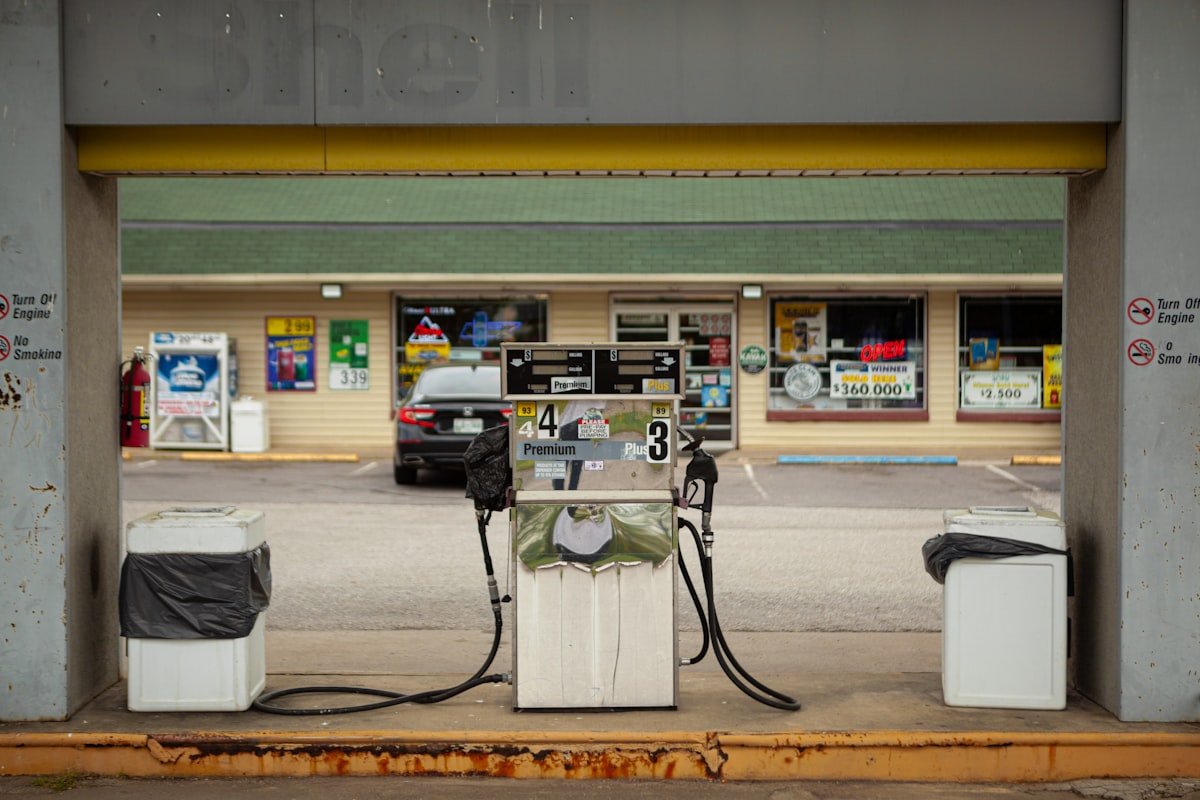
Japan’s average gas price hit ¥161.8 per liter on March 9 — four straight weeks of increases. By March 12, some stations were charging ¥196 per liter. Wholesalers raised their prices by about ¥26 per liter that same day.
And here’s what really bothers me. The actual physical shortage of oil wouldn’t realistically start until around March 21 — Japan has 254 days of reserves. But stations raised prices immediately. Feels a lot like price gouging dressed up as market adjustment.
The government announced emergency price stabilization on March 11, targeting a ¥170 per liter cap with subsidies kicking in March 19. Whether that holds? We’ll see.
Gas is just the beginning, though. Logistics costs go up. Energy costs go up. Every product that gets trucked anywhere gets more expensive. The stock market drop is probably pricing in exactly this — future inflation spreading through everything.
That slow creep is what worries me most.
This Crisis Has More “Unpleasant Elements” Than Others
I’ve lived through the tariff shock and the COVID crash. I wrote about watching my S&P 500 gains shrink by $13K just last week.
This one feels different. Not worse in portfolio terms — $4,700 is far less than the $50K I lost during tariffs. But the number of “unpleasant elements” stacked on top of each other is higher than anything I’ve experienced.
Your portfolio drops. Your gas bill jumps. Your grocery costs creep up. Iran’s new leader says the strait “should remain closed.” Trump says “We’ll take as long as needed.” There’s no timeline. No endgame anyone can point to.
With tariffs, you could at least imagine “well, eventually they’ll negotiate.” With a war and a strait blockade? Duration is the scariest variable. And nobody’s offering answers.
Why I Didn’t Change Anything
Haven’t sold a single share. Haven’t paused a single automatic contribution. Haven’t logged into my brokerage account to adjust anything.
This is exactly why I do dollar-cost averaging instead of lump-sum investing. You never know when something like this will happen. Not just “a crash” — but a military strike on a major oil-producing nation, followed by a blockade of the world’s most critical shipping lane, followed by immediate price spikes at the pump.
Too many unexpected events. Way too many. Trying to time your way around all of them is a fool’s game. I’d rather keep buying mechanically at whatever price the market gives me, because eight years of never selling VTI has taught me one thing: my predictions are terrible, but my patience works.

The contributions keep running. Same amount every month. Same funds. My NISA — Japan’s Roth IRA equivalent, where investment gains are completely tax-free — stays fully utilized. Our dual-income $2,500 monthly investment setup doesn’t skip a beat.
The Double Whammy Nobody Talks About
Most investing blogs focus on portfolio losses during a crisis. Fair enough. But what about the other side — the cost of living going up at the exact same time?
Your assets shrink. Your expenses grow. That’s a squeeze from both directions.
I’m losing $4,700 on paper while simultaneously paying more for gas, more for groceries (eventually), more for everything that moves on a truck. The portfolio loss is temporary — I believe that based on historical patterns. But the price increases? Those tend to stick around.
This double whammy — shrinking portfolio plus rising costs — is what makes this crisis feel heavier than the numbers alone would suggest. I wrote about this angle on my Note blog too, because it’s the part that doesn’t get enough attention.
Wars Don’t End When You Want Them To
When Russia invaded Ukraine, I figured it would be over in months. It’s been over two years. Now Iran. Before that, something else. There’s always a conflict burning somewhere.
I’m starting to accept something I should have realized earlier: wars aren’t temporary disruptions. They’re a permanent feature of the world. Tariffs get rolled back. Financial crises resolve. But armed conflicts? They end when people decide to stop fighting, and nobody can predict when that happens.
As an investor, I can’t build my strategy around wars ending on schedule. I have to assume that somewhere in the world, something is always burning — and invest anyway. Because markets have grown through every war in modern history. Not because wars don’t matter, but because the world keeps building despite them.
The Strait of Hormuz might reopen next month or next year. I genuinely don’t know. But my automatic contributions don’t care about timelines. They just keep running.
DCA Vindicated (Again)
Every time a crisis hits, I have the same thought: thank god I didn’t go all-in at some arbitrary peak.
Dollar-cost averaging gets criticized for leaving returns on the table during bull markets. And that’s true — mathematically, lump-sum investing outperforms DCA about two-thirds of the time. I’ve read the studies.
But that other one-third? That’s when a president orders a strike on a Middle Eastern nation and oil prices jump 43% in two weeks. That’s when you’re really glad your money went in gradually, at many different price points, instead of all at once right before the world changed.
I can’t predict wars. I can’t predict blockades. I can’t predict which president will do what to which country. So I don’t try. I just keep the automatic transfers running, month after month, and let the averaging do its job.
Anyway, that’s my stance. Same as it was during tariffs. Same as it was during COVID. Boring. Repetitive. Still working.
What Comes Next
More losses, probably. Oil isn’t coming down until the strait reopens, and nobody knows when that happens. Gas prices will keep climbing. Other costs will follow, slowly.
My plan remains unchanged. Monthly contributions continue. Emergency fund stays untouched. I’ll keep reading the news, keep checking my account at unreasonable hours, and keep doing absolutely nothing about it.
Someday this will be another line in the table of “crises I invested through.” Right now it doesn’t feel that way. Right now it feels heavy, uncertain, and expensive at the pump.
But eight years of experience tells me: this feeling passes. The strategy holds. And the settings stay exactly where they are.
This post reflects my personal investing experience and is not financial advice or a recommendation of any specific financial product. All investments carry the risk of loss, and any decisions should be made at your own discretion.
Related Articles

I Have ¥50M in Assets. I Still Don't Know What I'm Doing About My Daughter's Education.
A Japanese salaryman with ¥50M in assets breaks down education costs, school choices, and why he refuses to call it an "investment"

¥170K a Month on Food for Three. Here's Where Every Yen Goes.
A dual-income Japanese family of three breaks down their ¥170K monthly food costs and explains why they won't cut back despite April's price hikes

Japan's 5% Wage Hike Made Headlines. My Raise Was Zero.
A 40-something salaryman breaks down his ¥350K take-home pay and explains why he stopped caring about raises