A Japanese Chip Stock Went Up 75x. Almost Nobody Actually Made 75x
Kioxia ran roughly 75x from IPO on the AI-memory boom. But that's a low-to-high figure. Why entry, exit and size decide your real return, not the headline.
Table of Contents
- Kioxia went up 75x, and honestly, it stirred something in me
- Quick context: what Kioxia even is
- But who actually captured that 75x?
- Run the math and the dream shrinks to a real size
- The winners are loud because the losers stay quiet
- Would I buy it now? No — and here’s my line
- The dream itself is what makes the market worth being in
- Indexing has a dream too — it just takes time
Kioxia went up 75x, and honestly, it stirred something in me
Let me admit it up front. I saw “Kioxia up 75x” floating around social feeds, and something in my chest moved.
I’ve only bought index funds since 2018. I don’t own a single individual stock. And still, a number like that makes me twitch. A regular salaryman hitting one stock and changing his whole life — that’s a dream you literally cannot see if all you do is dollar-cost average into index funds.
So let me check the numbers.
Quick context: what Kioxia even is
If you’re not in Japan: Kioxia is a Japanese NAND flash memory maker, spun out of Toshiba a few years back. Think of it as a smaller rival to Samsung, SK Hynix, and Micron — it sits around #3 in NAND with roughly 14% share.
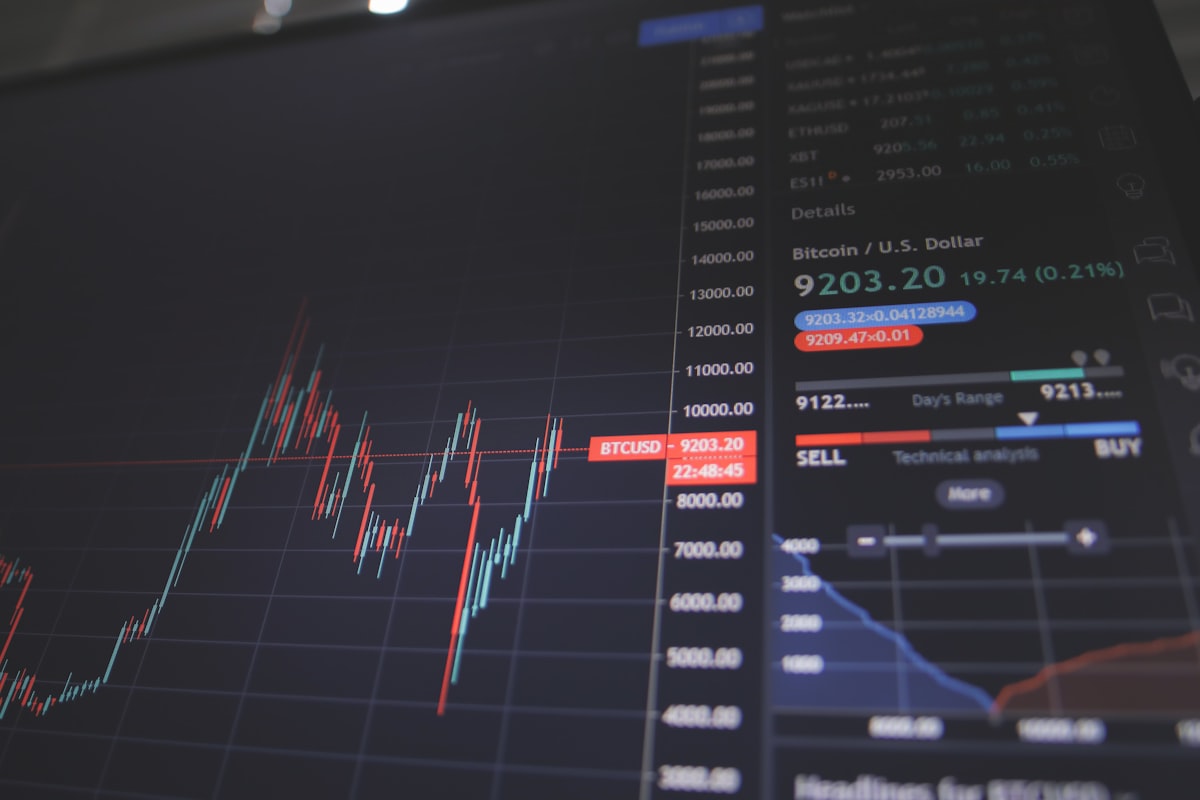
Here’s the run. Kioxia IPO’d in December 2024 at about ¥1,455 a share ($9.70). By June 19, 2026, it closed at ¥108,600 ($724). That’s roughly 75x. It’s up more than 600% this year alone — reportedly the best-performing chip stock in the world.
The driver is generative AI. AI data centers need enormous amounts of memory, and demand for Kioxia’s NAND flash exploded. Revenue is expected up 37% year over year, operating profit up something like 90%.
So yeah. The twitch is understandable.
But who actually captured that 75x?
Here’s where my annoying habit kicks in. I immediately think: okay, but really?
That “75x” is a strange number when you look closely. It’s the lowest price compared to the highest price. So the only way to make 75x is to buy at the ¥1,455 IPO and never sell a single share until ¥108,600. In theory.
How many people actually did that?
Start with buying. Getting IPO allocation is a lottery — most people couldn’t even get in. And say you did. The moment a stock doubles, most of us take the money and run. Holding to 3x takes real nerve. Holding to 10x? That’s a special kind of crazy (I mean that as a compliment).
Back when I traded individual stocks, I’d get jumpy the second a position was up a little and sell. I think I once did a tiny victory dance over a ¥100K (~$670) gain. Tell that guy to “hold this for 75x” and it was never, ever happening.
So “the stock that went up 75x” and “the people who made 75x” are two completely different things. The first group is large. The second is, I’d bet, shockingly small.
Run the math and the dream shrinks to a real size
Let me do the thing I always do and open a spreadsheet.
Say you put ¥1M ($6,700) into Kioxia at the IPO and held the whole way to 75x. That’s ¥75M ($500K). Genuinely life-changing.
But real humans behave like this:
- Sell at 2x: ¥1M → ¥2M (+¥1M)
- Hold to 3x: ¥1M → ¥3M (+¥2M)
- Iron grip to 5x: ¥1M → ¥5M (+¥4M)
Already a totally different universe from ¥75M. And that’s assuming ¥1M into a single stock.
How many people put their whole net worth into one name? Almost nobody. You get scared and commit a slice. Put 5% of your money in — say ¥500K — ride it to 3x, and you’re up ¥1M (~$6,700). Nice. Not life-changing.
If that sounds cynical, it’s the opposite. Turning ¥1M into ¥2M is genuinely great. It’s just nothing like the number the “75x” headline quietly promises. The moment you mistake the headline for your share, you lose the plot.

The winners are loud because the losers stay quiet
But scroll social media and it looks like everyone caught it.
That’s a structure problem. Winners post, because winning feels good. The people who didn’t buy, who sold at 2x, who never heard of it — they don’t go out of their way to announce “I missed this one.” So your feed fills with success stories, while the much larger crowd behind them stays silent.
Loudness and headcount are not the same thing.
Forget that, and you start feeling like the whole world got rich and you alone missed the boat. It’s mostly an illusion. The number of people who actually banked the full 75x is far smaller than it looks.
What Kioxia taught me isn’t stock-picking or timing. It’s this: don’t get whipped around by a number.
Would I buy it now? No — and here’s my line
So would I buy in today? No.
Kioxia’s P/E is around 106. Roughly speaking, at current earnings it’d take a century to earn back what you pay. Playing at that level is pro territory. It’s not a number an amateur like me should be touching.
I have a fairly hard line: if I’m buying an individual stock as an amateur, I don’t touch anything over a P/E of 30. That’s one of the few rules I beat into myself after getting burned trading individual stocks.
And if I ever did keep a small “fun” individual-stock sleeve, I’d go the other way — hunt for stuff under a P/E of 10, names nobody’s talking about, things that have fallen out of the trend. While everyone piles into Kioxia, my move would be to quietly pick through the other side of the room.
Kioxia is dead center of the trend. Which means, by my own rule, it was never a candidate. My heart moves, and my rule says “don’t.” You need a line that clear, or a jumpy guy like me just gets swept along.
And sure, I think about whether this AI-semiconductor party eventually pops. A P/E over 100 doesn’t last forever. But I don’t think about it hard, because guessing the top is a fool’s errand and I’d be wrong anyway. Pop or party on, my index contributions don’t change by a single yen. That “I don’t have to think hard about it” is the most underrated part of indexing.

The dream itself is what makes the market worth being in
After all that “reality is harsh” talk, let me flip it.
Honestly, I still catch myself doing the “what if I’d bought it” thing. If you’re standing in the same stock market, the odds of one trade changing your life aren’t zero. You’re within arm’s reach of that. It’s a little thrilling.
And the fact that dreams like this show up regularly — that’s the appeal of the market. Unlike a lottery ticket, you’re betting on real companies that actually grow. Every so often a monster like Kioxia appears. Getting to watch that from the stands is worth something on its own.
I’m not trying to kill the dream. The opposite. The dream is exactly what makes this interesting.
Indexing has a dream too — it just takes time
“So you just watch from the bleachers?” Not quite.
Think about it: the S&P 500, if you’d been buying it 10 or 20 years ago, has compounded into serious money. Not 75x, but a lot. It’s a slower dream — your money quietly swelling over decades until one day you look up and your options in life have multiplied.
If Kioxia’s dream is “75x in a few years,” indexing’s dream is “several times over in twenty years, and you barely noticed.” No fireworks. But you don’t need superhuman nerve to hold it, and you’re not betting the house on one name. You also don’t have to glue yourself to a chart hunting for the exit. Sleep, work, occasionally open the app and mutter “oh, it’s up.” A dream you can run on that little attention. For someone with a day job, that’s exactly the right distance.
I just picked that dream. I don’t regret skipping Kioxia. I probably couldn’t have gotten in, and if I had, I’d have sold at 2x anyway.
Today, nothing changes. I open the brokerage app, confirm this month’s contribution landed in the same three funds, and close it. Kioxia can go to 100x. My buy date doesn’t move.
Stock prices, multiples, and P/E figures are based on news and public data as of June 2026. This is a personal opinion, not investment advice. Currency conversions use roughly $1 = ¥150. Do your own homework before doing anything with your own money.
Related Articles
When People Start Saying 'Index Funds Aren't Enough,' AI Stocks Are Probably Overheated
My friend made $20K on Micron. Social feeds compare index funds to AI funds over four-week windows. Here's why I'm not changing anything.

I Sold 3 Japanese Stocks 15 Years Ago. They'd Now Be Worth $200K More — Here's What I Got Wrong
A 46-year-old Tokyo salaryman walks through three stock sales from 2011 that turned into a $200K opportunity cost — and what finally fixed the pattern.
Holding $260K in Unhedged Dollar-Denominated Funds in Japan: Why I Never Used Currency Hedging
Why I hold unhedged USD funds from Japan: fees, DCA fit, what ¥159 USD/JPY does to a $260K portfolio, and why I won't stop buying if the yen rebounds.